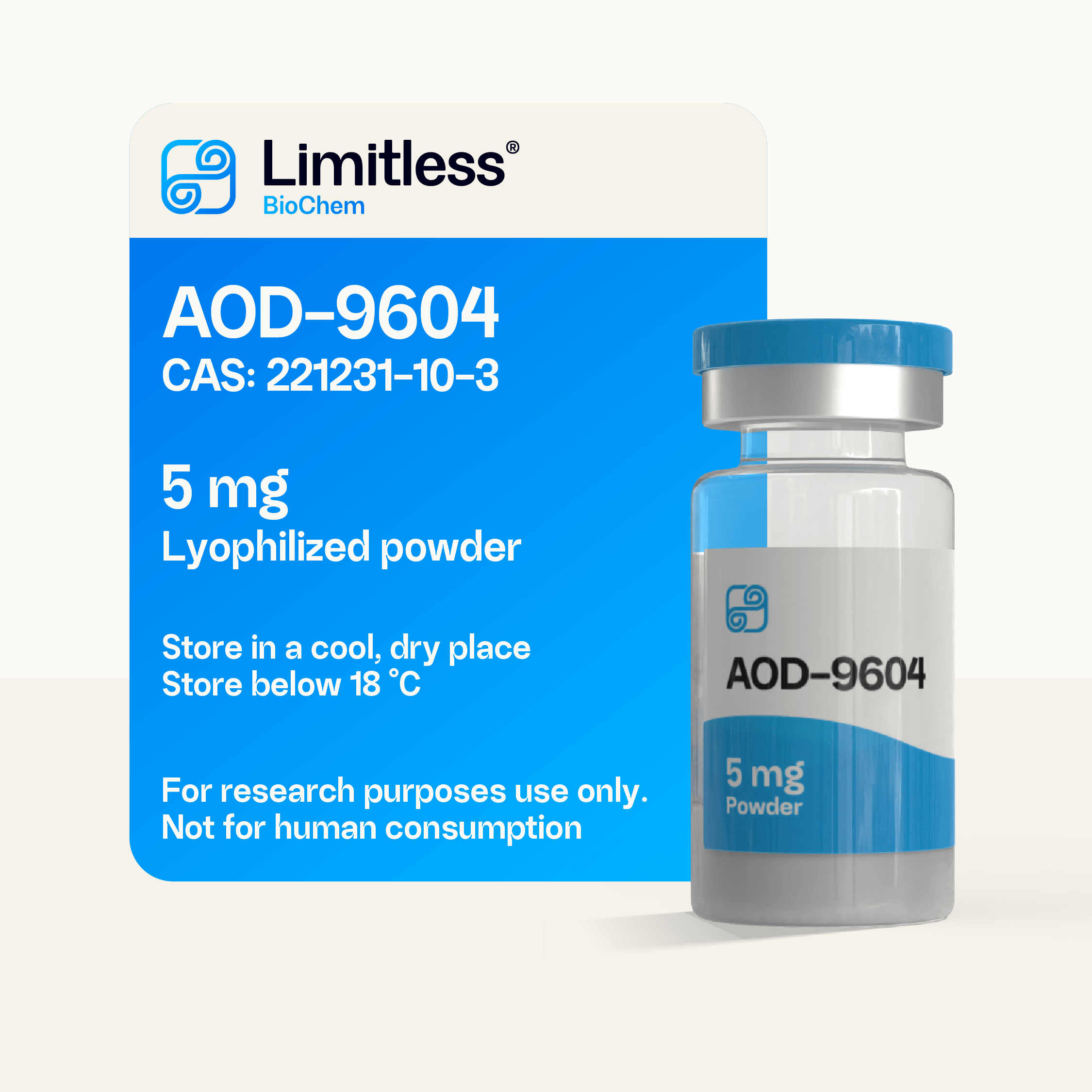
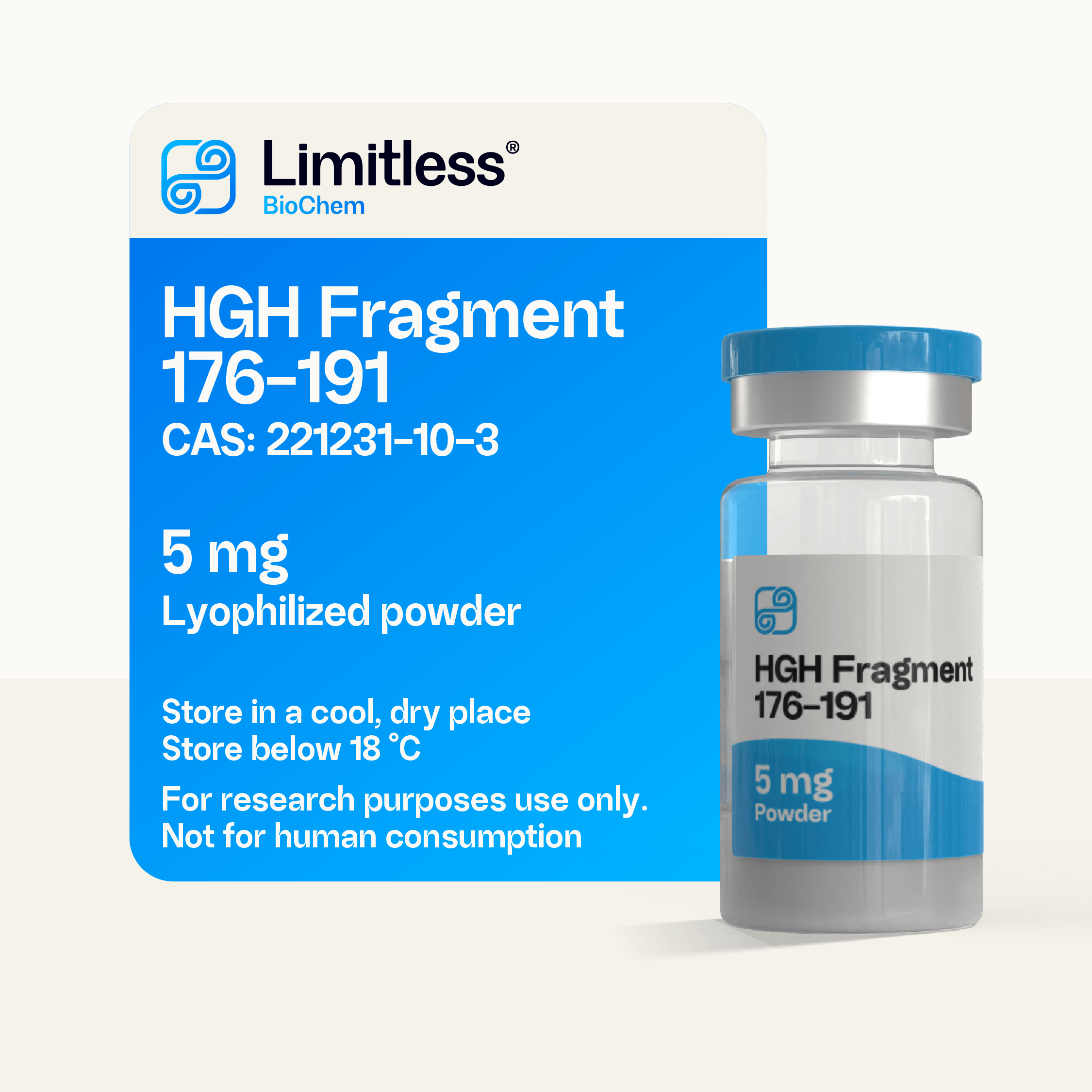
HGH Fragment 176-191 5 mg research-grade lyophilized peptide powder in a glass vial. HGH Fragment 176-191 (the parent sequence of AOD-9604) is a synthetic C-terminal fragment of human growth hormone studied in experimental models of lipolysis, adipocyte metabolism and growth hormone receptor–related signaling.
Research Overview
HGH Fragment 176-191 corresponds to the C-terminal 16-amino-acid region of human growth hormone. In experimental models it is used to investigate GH-fragment signaling, lipolytic pathways in adipocytes and metabolic regulation, while avoiding direct activation of full-length GH receptor mitogenic pathways. All studies remain strictly within laboratory/experimental contexts without therapeutic claims.
Primary Research Areas
- Lipolysis & adipocyte metabolism: Experimental models assessing hormone-sensitive lipase activation, fatty acid release and triglyceride turnover in adipose tissue [1].
- Growth hormone fragment signaling: In vitro work on downstream pathways modulated by the 176-191 fragment compared with full-length GH, including cAMP and MAPK-related cascades [2].
- Metabolic & energy-balance research: Laboratory studies exploring body-composition and energy-expenditure pathways in controlled animal and cell-based models [3].
- Sugar uptake into fat cells: in fat cells taken from obese rats the plain fragment cut glucose uptake, both at rest and after insulin, and more strongly than whole growth hormone did. The tyrosine-tagged version AOD-9604 behaved differently in mice, raising neither blood sugar nor lowering insulin output [2,4].
- Fat stored, not fat burned: given to rats, the 177-191 fragment stopped fat being made but released none that could be measured: the glycerol coming out of fat pads did not change. So the weight effect in animals looks like less fat laid down rather than fat burned off [5].
- No published human results: the modified form AOD-9604 had reached phase IIa obesity trials by February 2002, and no result from any human trial of it, or of the plain fragment, has been indexed in PubMed since. Every fat-loss figure quoted for this molecule comes from mice, rats or isolated cells [6].
- Knee cartilage in rabbits: the modified molecule AOD-9604, injected into the knees of 32 rabbits with chemically damaged cartilage, improved the cartilage and shortened limping, and did best combined with hyaluronic acid. It went straight into the joint, in rabbits, and was not the plain fragment [7].
- What users report: a 2026 review of growth-hormone-axis peptides bought online, AOD-9604 among them, lists raised prolactin and cortisol, appetite change, unsettled blood sugar, fluid retention, aching muscles and joints, and injection-site reactions. These are reports across the whole group, not measurements from a trial of this peptide [8].
References
- Ng FM, Jiang WJ, Gianello R, et al. Molecular and cellular actions of a structural domain of human growth hormone (AOD9401) on lipid metabolism in Zucker fatty rats. J Mol Endocrinol. 2000;25(3):287-98. PMID 11116208. doi:10.1677/jme.0.0250287
- Heffernan MA, Thorburn AW, Fam B, et al. Increase of fat oxidation and weight loss in obese mice caused by chronic treatment with human growth hormone or a modified C-terminal fragment. Int J Obes Relat Metab Disord. 2001;25(10):1442-9. PMID 11673763. doi:10.1038/sj.ijo.0801740
- Heffernan MA, Jiang WJ, Thorburn AW, et al. Effects of oral administration of a synthetic fragment of human growth hormone on lipid metabolism. Am J Physiol Endocrinol Metab. 2000;279(3):E501-7. PMID 10950816. doi:10.1152/ajpendo.2000.279.3.E501
- Wijaya E, Ng FM. Effect of an antilipogenic fragment of human growth hormone on glucose transport in rat adipocytes. Biochem Mol Biol Int. 1993;31(3):543-52. PMID 8118430.
- Wu Z, Ng FM. Antilipogenic action of synthetic C-terminal sequence 177-191 of human growth hormone. Biochem Mol Biol Int. 1993;30(1):187-96. PMID 8358331.
- Wilding J. AOD-9604 Metabolic. Curr Opin Investig Drugs. 2004;5(4):436-40. PMID 15134286.
- Kwon DR, Park GY. Effect of Intra-articular Injection of AOD9604 with or without Hyaluronic Acid in Rabbit Osteoarthritis Model. Ann Clin Lab Sci. 2015;45(4):426-32. PMID 26275694.
- Dominikowski A, Rękoś Z, Olejarz M, et al. The emerging landscape of performance-enhancing peptides modulating GH-IGF1 axis: bridging the gap between clinical evidence and patient self-administration. Front Endocrinol (Lausanne). 2026;17:1822475. PMID 42395176. doi:10.3389/fendo.2026.1822475
Recommended solvent — 0.6% Acetic acid, not bacteriostatic water
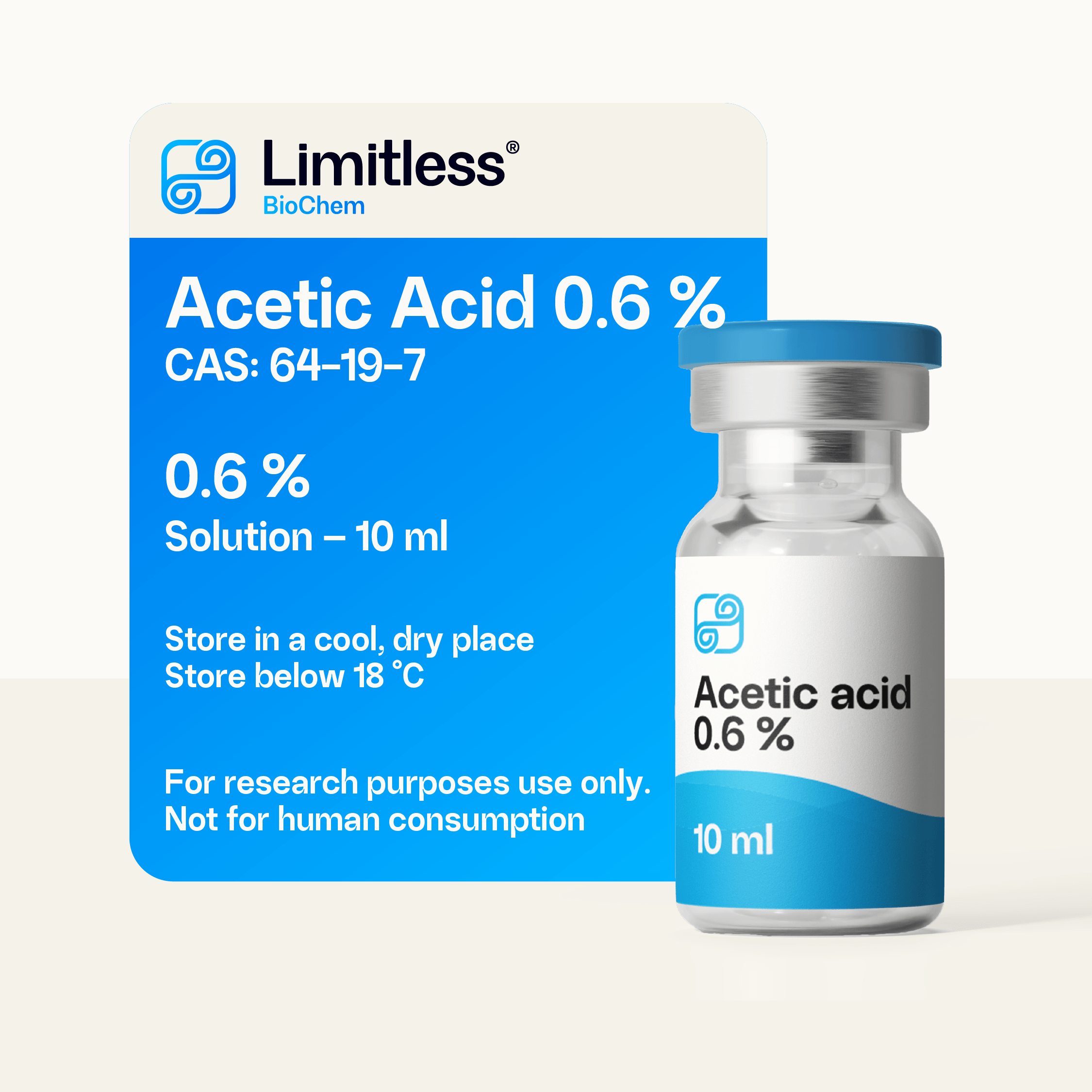
This peptide has limited solubility in neutral water. Laboratory practice recommends a mildly acidic solvent — 0.6% acetic acid — which supports complete dissolution and helps protect oxidation-sensitive residues.
Bacteriostatic water (BAC) is not the recommended solvent for this peptide.
For convenient laboratory use, see Acetic Acid 0.6% – 10 ml.