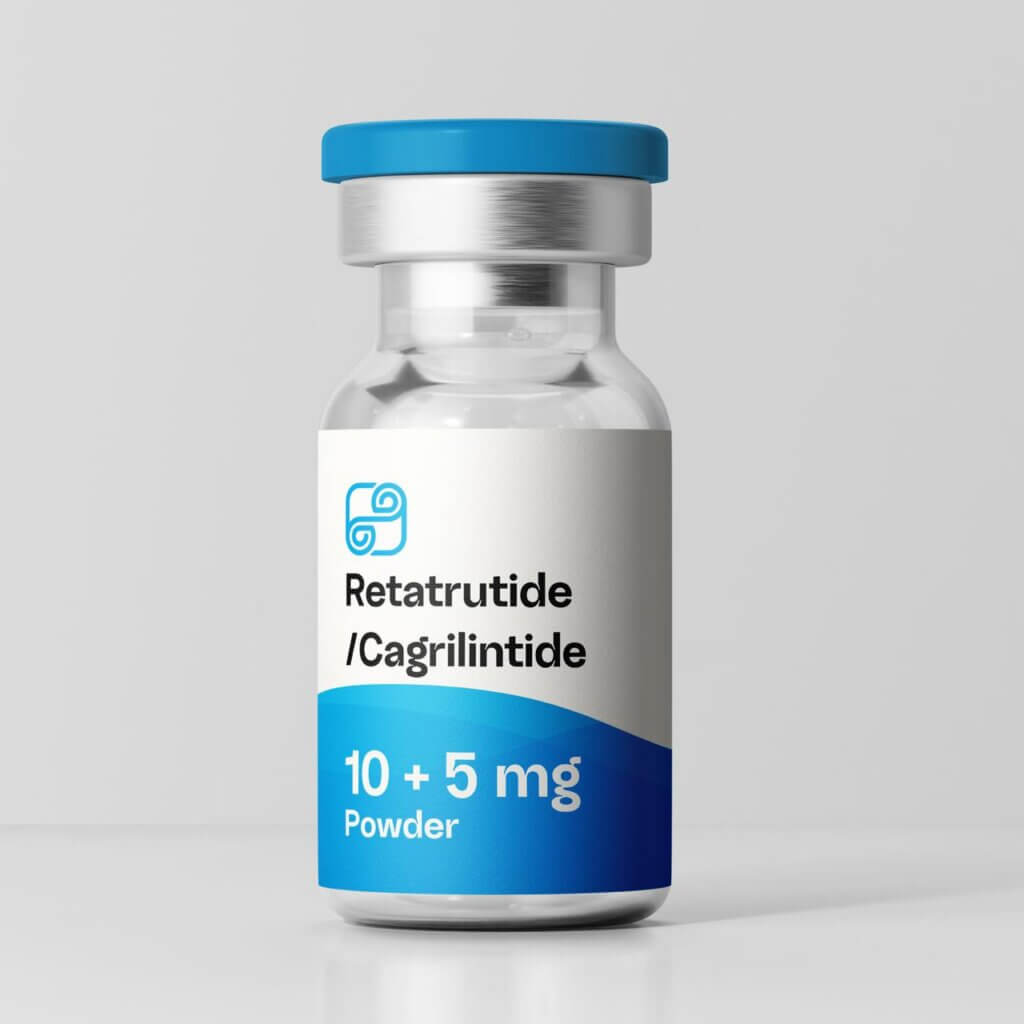
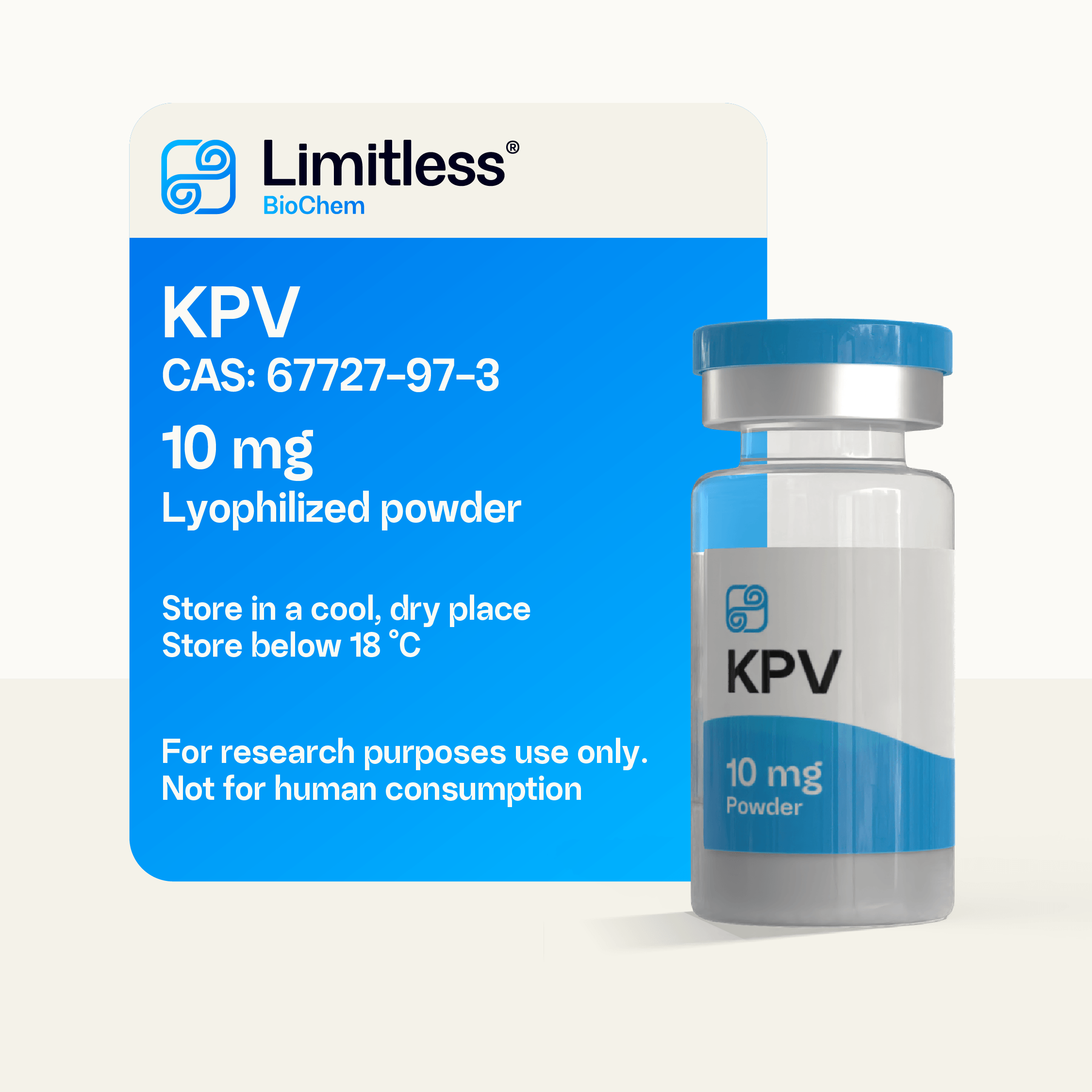
KPV 10 mg research-grade lyophilized peptide powder in a glass vial. KPV is a tripeptide Lys–Pro–Val, representing the C-terminal active fragment of α-Melanocyte-Stimulating Hormone (α-MSH), studied in anti-inflammatory, epithelial barrier and melanocortin-pathway research models.
Research Overview
KPV (Lys–Pro–Val) is a tripeptide derived from the C-terminal sequence of α-MSH. In experimental systems it is used as a tool compound to study melanocortin-related anti-inflammatory signaling, epithelial barrier integrity and cellular stress responses in skin and intestinal models.
Primary Research Areas
- Anti-inflammatory pathways: models investigating suppression of pro-inflammatory signaling and modulation of cytokine/chemokine responses [1,8].
- Intestinal barrier & epithelial integrity: research on tight-junction proteins, epithelial repair dynamics and barrier function under inflammatory challenge [1,8].
- Skin & keratinocyte models: experimental systems exploring oxidative stress, inflammation and melanocortin-pathway effects in skin cells [7].
- Melanocortin & α-MSH signaling: studies where KPV serves as the minimal α-MSH fragment to probe receptor-mediated anti-inflammatory mechanisms [7].
- Active when swallowed: the gut pulls it inward through PepT1, so it works when given by mouth: nanomolar amounts shut down inflammatory signalling in human intestinal and immune cells, and KPV in the drinking water reduced two colitis models in mice. Packed into colon-targeted nanoparticles, the same benefit came at a concentration 12,000 times lower [1,3].
- Fewer colon tumours in mice: in mice given a carcinogen plus repeated colitis, KPV prevented tumours from forming, and the effect vanished in mice bred without the PepT1 transporter. This is prevention in a mouse model, not treatment of a cancer that already exists, and there is no human work [4].
- Kills bacteria and yeast: in the dish, α-MSH and its KPV fragment held back colony formation by Staphylococcus aureus and cut the survival and germ-tube formation of the yeast Candida albicans, at concentrations reaching down into the picomolar range. Nothing here shows it clears an infection in a living animal or a person [5].
- A scraped cornea closed faster: rabbits had the whole surface layer rubbed off both corneas and were given KPV drops four times a day; at 60 hours eight out of eight treated corneas had resurfaced while none of the placebo corneas had. It is one animal study, and the peptide was dropped on the eye rather than injected [6].
- It works without the pigment receptor: mice carrying a non-functional MC1 receptor, the receptor α-MSH uses to darken skin, were still protected: every KPV-treated animal survived DSS colitis, and in normal mice treatment brought earlier recovery and a significantly stronger regain of body weight. So KPV is not expected to change skin colour the way α-MSH does [2].
References
- Dalmasso G, Charrier-Hisamuddin L, Nguyen HT, et al. PepT1-mediated tripeptide KPV uptake reduces intestinal inflammation. Gastroenterology. 2008;134(1):166-78. PMID 18061177. doi:10.1053/j.gastro.2007.10.026
- Kannengiesser K, Maaser C, Heidemann J, et al. Melanocortin-derived tripeptide KPV has anti-inflammatory potential in murine models of inflammatory bowel disease. Inflamm Bowel Dis. 2008;14(3):324-31. PMID 18092346. doi:10.1002/ibd.20334
- Laroui H, Dalmasso G, Nguyen HT, et al. Drug-loaded nanoparticles targeted to the colon with polysaccharide hydrogel reduce colitis in a mouse model. Gastroenterology. 2010;138(3):843-53.e1-2. PMID 19909746. doi:10.1053/j.gastro.2009.11.003
- Viennois E, Ingersoll SA, Ayyadurai S, et al. Critical role of PepT1 in promoting colitis-associated cancer and therapeutic benefits of the anti-inflammatory PepT1-mediated tripeptide KPV in a murine model. Cell Mol Gastroenterol Hepatol. 2016;2(3):340-357. PMID 27458604. doi:10.1016/j.jcmgh.2016.01.006
- Cutuli M, Cristiani S, Lipton JM, et al. Antimicrobial effects of alpha-MSH peptides. J Leukoc Biol. 2000;67(2):233-9. PMID 10670585. doi:10.1002/jlb.67.2.233
- Bonfiglio V, Camillieri G, Avitabile T, et al. Effects of the COOH-terminal tripeptide alpha-MSH(11-13) on corneal epithelial wound healing: role of nitric oxide. Exp Eye Res. 2006;83(6):1366-72. PMID 16965771. doi:10.1016/j.exer.2006.07.014
- Sun MC, Xu XL, Du Y, et al. Biomimetic Melanosomes Promote Orientation-Selective Delivery and Melanocyte Pigmentation in the HO-Induced Vitiligo Mouse Model. ACS Nano. 2021;15(11):17361-17374. PMID 34662120. doi:10.1021/acsnano.1c05321
- Zhang D, Jiang L, Yu F, et al. PepT1-targeted nanodrug based on co-assembly of anti-inflammatory peptide and immunosuppressant for combined treatment of acute and chronic DSS-induced ColitiS. Front Pharmacol. 2024;15:1442876. PMID 39211778. doi:10.3389/fphar.2024.1442876
Recommended solvent — Bacteriostatic water

For diluting lyophilized peptide powders, use a sterile and suitable research solvent such as bacteriostatic water (BAC), which may help support handling stability and reduce contamination risk.
For convenient laboratory use, see Bacteriostatic Water – 10 ml.